
- About Us
- Legal Services
- Family Law
- Property
- Marriage
- Immigration
- Contact
- Payments
 The proposal to extend Thailand’s property leasehold limit from 30 years to 99 years is perhaps the most significant—and controversial—real estate reform in the history of the Kingdom. The 99 year yield lease hold for sure. Since 2024 and through early 2026, the Thai government, led by the Ministry of Interior and supported by the Ministry of Finance, has pushed this initiative as a “nuclear option” to revitalize the economy and secure Thailand’s position as a global hub for high-net-worth residents.
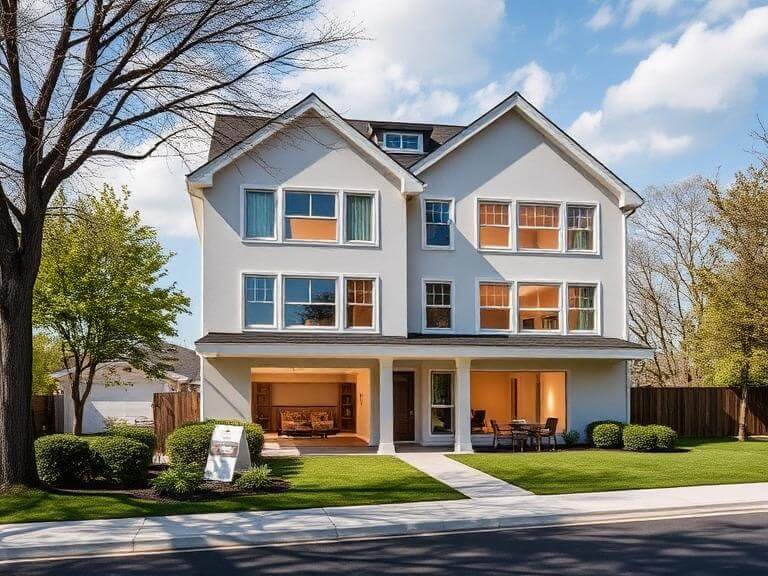
To understand the 99-year proposal, one must understand the current limitations. Under Section 540 of the Civil and Commercial Code (CCC), a lease of immovable property cannot exceed 30 years. Any lease made for a longer period is automatically reduced to 30 years by law.
The “30+30+30” Myth
For decades, lawyers and real estate agents have used “30+30+30” contracts to promise 90 years of security to foreign buyers. However, the Thai Supreme Court has consistently ruled that these “options to renew” are personal obligations of the current owner, not proprietary rights that automatically bind a future heir or buyer of the land.
If the Thai landlord dies or sells the land to someone else, the new owner is legally entitled to ignore the “option to renew,” leaving the foreign tenant with no recourse. This “legal fragility” has long deterred serious institutional investment and wealthy retirees from committing significant capital to Thai landed property. This is what there is a 99 year yield lease hold.
The current legislative push seeks to amend the CCC and the Land Code to allow for a single, registered leasehold term of up to 99 years. This is the 99 year leasehold. Unlike the previous failed attempt in 1999 (the “Lease of Immovable Property for Commercial and Industrial Purposes Act”), which only allowed 50 years for specific business uses, the 2025 proposal is designed for residential use. This is the 99 year yield lease hold.
Key Features of the 99-Year Proposal
Asset Categorization: The lease would be treated as a “Real Right” (Jura in Re) rather than a “Personal Right.” This means the lease is attached to the land itself, making it transferable, inheritable, and—crucially—mortgageable at Thai banks.
Renewal Clauses: The 99-year term is likely to be a fixed term, though discussions are ongoing about a “50+49” structure to mitigate political blowback.
Foreign Quotas: The proposal is often bundled with a plan to increase the foreign ownership quota in condominiums from 49% to 75%, though the extra 26% would be strictly leasehold with no voting rights in the juristic person meeting.
Thailand does not operate in a vacuum. It is in a fierce “war for talent and capital” with its ASEAN neighbors. In the eyes of a global investor, Thailand’s 30-year limit has long made it the “odd man out” in the region. This is the 99 year yield lease hold
Country | Leasehold Limit | Foreign Land Ownership |
Malaysia | 99 Years | Permitted (with price floors) |
Vietnam | 50–70 Years | Permitted for 50 years (renewable) |
Singapore | 99 or 999 Years | Highly Restricted |
Philippines | 25 + 25 Years | Restricted |
Thailand | 30 Years (Current) | Prohibited |
By moving to 99 years, Thailand immediately levels the playing field with Malaysia and Singapore, offering the long-term security required for “generational planning”—the ability for a buyer to pass an asset down to their children and grandchildren. This is the 99 year yield lease hold.
The Thai government’s shift toward the 99-year model is driven by three “macro-crises” that converged in 2025.
Following the pandemic and a slowdown in the Chinese property market (historically Thailand’s biggest buyer), there is a massive surplus of luxury villas and mid-to-high-end condominiums. Domestic demand is insufficient to absorb this supply because of high household debt. Opening the “landed property” market to foreigners via 99-year leases would instantly unlock billions of dollars in “trapped” inventory. This is the 99 year yield lease hold
The government’s goal is to attract 1 million high-spending foreign residents through the Long-Term Resident (LTR) and Destination Thailand Visa (DTV) programs. However, a “Digital Nomad” or a “Wealthy Pensioner” is unlikely to build a 50-million-baht custom home on a 30-year lease. A 99-year lease transforms a “rental” into an “investment.”
Real estate accounts for roughly 10% of Thailand’s GDP. A surge in long-term leasehold registrations would trigger a massive wave of construction, interior design, and professional services, providing a multiplier effect throughout the economy.
The primary obstacle to the 99-year lease is not economic; it is emotional and political. The opposition and nationalist groups have frequently used the term “Kai Chart” (Selling the Nation) to attack any land-related reforms.
The “Nominee” Counter-Argument
Government proponents argue that the 99-year lease is actually a tool to combat the “Nominee” problem. Currently, many foreigners use illegal Thai nominee companies to “own” land. By providing a legal, transparent 99-year leasehold option, the government can bring these “grey” investments into the light, register them properly, and collect tax revenue on them.
To cool political tensions, the 2026 draft legislation includes “safeguards”:
Zoning Limits: 99-year leases may be restricted to specific “Investment Zones” like the Eastern Economic Corridor (EEC), Phuket, Samui, and parts of Bangkok.
Land Size Caps: Limits on how much land a single foreigner can lease (likely 1 Rai for residential use).
High Price Floors: Ensuring that foreigners are only competing in the luxury market, not driving up the price of “affordable housing” for Thai citizens. This is the 99 year yield lease hold
If the law passes in late 2026 as expected, we can anticipate a “Re-Pricing Event” across the country.
Villas & Landed Houses: These will see the highest appreciation. A villa on a 99-year lease is worth significantly more (approximately 30-40% more in Net Present Value) than the same villa on a 30-year lease.
The Banking Sector: Thai banks, which currently do not lend to foreigners for property, may begin offering “Leasehold Mortgages” because a 99-year asset provides sufficient collateral. This is the 99 year yield lease hold.
The Condo Market: As the foreign quota increases to 75%, we will see buildings become “international hubs.” This may lead to higher maintenance standards but could also lead to “ghost buildings” if the owners are primarily seasonal travelers.
As of March 2026, the proposal has cleared the first stage of public hearings. The timeline for implementation is projected as follows:
Q3 2026: Submission of the “Property Rights Modernization Act” to Parliament.
Q4 2026: Royal Assent and publication in the Royal Gazette.
Jan 2027: First registrations of 99-year leases at Land Offices nationwide.
The move to a 99-year leasehold scheme is a recognition that Thailand’s future lies in being a truly international society. It moves the country away from a “tourist economy” toward a “resident economy.” For the foreign resident, it provides the peace of mind to build a life; for the Thai government, it provides a stable, taxable, and legal framework for foreign capital.
While the “Selling the Nation” rhetoric will continue to be a hurdle, the economic reality—the need for a fresh influx of capital and the desire to modernize the legal system—makes the 99-year leasehold nearly inevitable. This is the 99 year yield lease hold.
The transition from a 30-year to a 99-year leasehold framework in 2026 is more than just a chronological extension; it is a fundamental shift in how foreign assets are treated under Thai law. For families, the difference lies in the move from a personal contractual right to a transferable proprietary asset.
Under the original Civil and Commercial Code (CCC), a lease is considered a “personal right” of the lessee. This creates two major “traps” for inheritance:
Termination Upon Death: By default, a lease in Thailand terminates immediately upon the death of the lessee. To prevent this, lawyers had to insert “Succession Clauses.” However, these clauses are only enforceable against the original landlord, not necessarily their heirs or a third-party buyer of the land.
The “30+30+30” Deadlock: Many families relied on promised renewals to pass property to the next generation. As of the March 2025 Supreme Court ruling (Case No. 4655/2566), these renewal clauses are now officially void and unenforceable. If a parent dies in year 25 of a 30-year lease, the child only inherits the remaining 5 years, with no legal way to force the 30-year renewal.
The 2025/2026 reform (often utilizing the Rights Over Leasehold Asset Act) changes the nature of the lease. It treats the 99-year term as a “Real Right”, similar to a condominium title.
Feature | 30-Year Lease (Pre-2025) | 99-Year Lease (Post-2026) |
Legal Nature | Personal Contract (Hire of Property) | Real Right (Asset-Backed) |
Status at Death | Terminates (unless clause exists) | Automatically becomes part of the Estate |
Heir’s Security | Limited to the remaining of 30 years | Secure for the remaining of 99 years |
Will Requirements | Complex “Assignment of Rights” | Standard Thai Will (Standard Asset) |
Transferability | Requires Landlord Consent | Freely Transferable/Inheritable |
In the 30-year era, “inheritance” was essentially a race against time. In the 99-year era, it becomes a Multi-Generational Asset.
Scenario A (The 30-Year Limit): A retiree buys a villa at age 60. By the time they pass away at 85, only 5 years remain. Their children inherit a “depreciating asset” that is nearly impossible to sell or live in long-term.
Scenario B (The 99-Year Limit): The same retiree buys at age 60. At 85, 74 years remain. The children inherit an asset with substantial market value, providing enough time for grandchildren to eventually inherit the same property.
It is crucial to note that on March 24, 2026, Thailand implemented a new Ministerial Regulation on Wills. This is particularly important for the new 99-year leases:
Mandatory Registration: Because a 99-year lease is a high-value asset, “holographic” (handwritten) wills are facing stricter scrutiny. It is now highly recommended to use the “Public Will” format at a local District Office (Amphur).
Taxation (The 100M THB Rule): Since a 99-year lease has a much higher valuation than a 30-year lease, it is more likely to trigger Thailand’s Inheritance Tax. If the lease value exceeds 100 million THB, the heirs will be subject to a 5-10% tax on the amount exceeding the threshold.
“A 30-year lease is a long-term rental; a 99-year lease is a family legacy.”
This is the 99 year yield lease hold. For families planning their future in Thailand, the 99-year scheme eliminates the “Nominee Company” risk. You no longer need a complex corporate structure to ensure your children can keep the house; you simply need a properly registered lease and a valid Thai Will.

The information contained in our website is for general information purposes only and does not constitute legal advices. For further information, please contact us.