
- About Us
- Legal Services
- Family Law
- Property
- Marriage
- Immigration
- Contact
- Payments
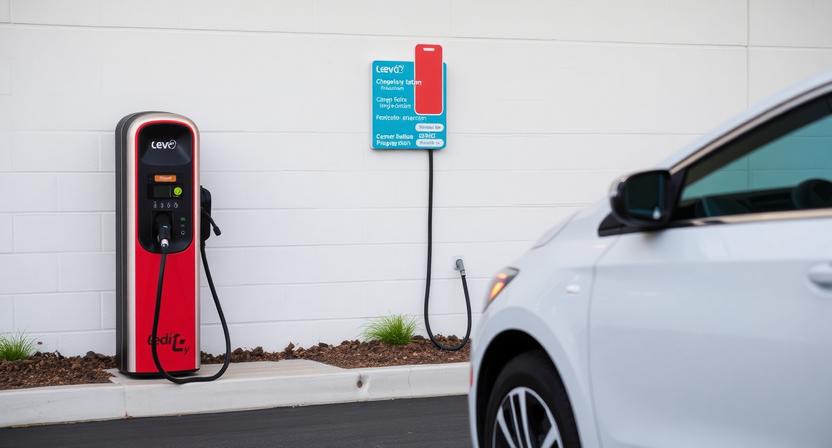
 This is about the setup of an EV charge points in Thailand. Thailand’s transition toward electric mobility has moved past the “early adopter” phase and into a period of mass-market maturation. As the nation pursues its 30@30 target—striving for 30% of all domestic vehicle production to be zero-emission by 2030—the infrastructure supporting this shift has come under intense scrutiny.
By early 2026, Thailand reached a critical mass of over 350,000 registered Battery Electric Vehicles (BEVs). This rapid growth exposed a fragmented landscape of charging infrastructure where safety protocols varied significantly between providers. To mitigate risks and formalize the industry, the Department of Energy Business (DOEB) is enforcing a comprehensive set of new technical and safety regulations effective April 2026. With the new Euro 5 arrival in Thailand as well as the new environmental laws in Thailand. You can start you own EV charge point by registering a business.
The information contained in our website is for general information purposes only and does not constitute legal advices. For further information, please contact us.
The timing of the April 2026 enforcement is not coincidental. It aligns with the expiration of the initial EV 3.0 incentive packages and the full implementation of the EV 3.5 framework, which shifts the focus from subsidizing imports to supporting local assembly and infrastructure quality. This is how to start an ev charge points.
The DOEB’s primary objective is to avoid the “fragmentation trap” that plagued previous technological transitions. Much like the global standardization of USB-C for electronics, Thailand seeks a unified protocol for EV charging. Fragmented standards in the early 2020s led to “range anxiety” not just from a lack of stations, but from a lack of trust in those stations. High-profile (though rare) incidents of thermal runaway in EVs globally highlighted the potential for catastrophe in high-density urban environments, such as underground parking in Bangkok’s commercial districts.
Under the new April 2026 rules, the “wild west” of EV charging installation is officially over. Operating a public charging station now requires a specific license issued by the DOEB in coordination with the Energy Regulatory Commission (ERC).
The licensing requirements are split into two primary tiers based on the total electrical capacity of the installation:
Tier 1: High-Capacity Stations (≥1,000 kVA)
Investors building large-scale charging hubs—typically those with dedicated transformers or large-scale Battery Energy Storage Systems (BESS)—must obtain a full Electricity Distribution License. This involves a rigorous audit of the grid-connection point to ensure the station does not cause harmonics or voltage dips in the local distribution network.
Tier 2: Low-Capacity Stations (<1,000 kVA)
Small to medium operators (e.g., 4–8 charging points in a shopping mall) are classified as “exempted businesses” but are now subject to a Mandatory Notification and Inspection protocol. They must prove that their installation meets the same technical safety benchmarks as larger stations, even if the licensing paperwork is streamlined. This is how to start an ev charge points.
To receive a license, an operator must submit a Technical & Safety Verification Report signed by a certified professional engineer. This report must explicitly confirm:
Compliance with TIS (Thai Industrial Standards) and IEC (International Electrotechnical Commission) hardware requirements.
The presence of integrated fire suppression and emergency shut-off systems.
Verification of surge protection levels that exceed the standard building code.
The April 2026 regulations lean heavily on the TIS 61851 and TIS 62752 series, which are localized versions of the premier international electrical standards. This ensures that hardware sold in Thailand is of the same caliber as that in Europe or North America. This is how to start an ev charge points.
The DOEB has prohibited the use of Mode 1 (simple AC charging via a standard domestic socket without a control box) for public use. Only the following are permitted:
Mode 2: AC charging with an In-Cable Control and Protection Device (IC-CPD). This is primarily for emergency or semi-public use.
Mode 3: AC charging via a dedicated EVSE (Electric Vehicle Supply Equipment) where the control pilot function is integrated into the station.
Mode 4: DC Fast Charging, where the converter is located within the station itself.
To ensure interoperability, the Type 2 connector (for AC) and the CCS Combo 2 (for DC) have been solidified as the national standards. While older Japanese-standard (CHAdeMO) stations are allowed to continue operating via a legacy clause, all new installations after April 2026 must provide the national standard connectors to qualify for a license.
Fire safety is the “cornerstone” of the 2026 regulations. The high energy density of EV batteries, combined with the extreme heat of the Thai climate, creates a unique set of risks that the DOEB has addressed through both active and passive protection mandates. v
1. Emergency Power-Off (EPO) Systems
Every charging station must be equipped with a clearly labeled, physical Emergency Stop button. Under the April 2026 rules:
The EPO must be placed at a height accessible to all users (1.2 meters).
Triggering the EPO must isolate the station from the power source within <100 milliseconds
The system must include a “fail-safe” mechanism where the station remains in a locked-out state until a manual reset by an authorized technician.
For stations located inside buildings, the DOEB now enforces strict Location Suitability Criteria:
Ventilation: Underground or enclosed stations must have mechanical ventilation capable of at least 6 air changes per hour to prevent the buildup of toxic gases in the event of a battery vent.
Structural Integrity: Charging points must be located in areas with a 2-hour fire-rated compartmentation. This means that if a car catches fire while charging, the structural elements of the building must be able to withstand the heat for at least 120 minutes without compromise.
Investors in premium or high-traffic “Supercharger” hubs are increasingly required to install Infrared (IR) Thermal Sensors. These sensors monitor the temperature of the vehicle’s charging port and the cable itself. If temperatures exceed a pre-set threshold (typically 80°C to 90°C), the station must automatically throttle the current or cease the session before a fire can ignite.
A common concern during Thailand’s monsoon season is the risk of lightning strikes and power surges damaging both the infrastructure and the vehicles. The 2026 standards mandate a “multi-layered” electrical defense.
Stations must now utilize Type 1 and Type 2 SPDs. These devices are designed to divert the massive energy of a lightning strike or a grid-switching surge away from the vehicle’s sensitive onboard charger (OBC). Given that an OBC replacement can cost upwards of 150,000 THB, this regulation is a direct win for consumer protection.
To prevent electric shock, particularly in wet conditions, the DOEB requires Type B RCDs for DC charging stations. Standard Type A RCDs (found in most homes) cannot detect “smooth” DC leakage, which is a risk during high-speed charging. Type B RCDs provide the highest level of protection by detecting AC, pulsed DC, and smooth DC residual currents.
While these regulations increase the “barrier to entry” for small-scale investors, they are coupled with significant financial incentives from the Board of Investment (BOI).
For an operator, complying with the April 2026 standards adds approximately 15% to 20% to the initial capital expenditure (CAPEX). This increase comes from the cost of certified Type B RCDs, higher-grade fire-resistant cabling, and the engineering certification fees.
To offset these costs, the BOI offers a 5-year Corporate Income Tax (CIT) exemption for charging stations that provide at least 40 charging points (with at least 25% being DC fast chargers). Even smaller stations can receive a 3-year exemption. Crucially, the BOI has made this tax holiday contingent on the station using a Smart Charging System that can communicate with the national grid for load management.
Until late 2025, EV charging in Thailand was heavily subsidized, with rates often kept artificially low to encourage adoption. However, the 2026 regulatory wave coincides with a transition to cost-reflective pricing. The ERC has indicated that as grid maintenance costs rise to accommodate the EV load, public charging rates may move from the current 7.5–8.5 THB range toward 9.5–11.0 THB per unit. The new safety standards justify this higher price point by offering a “guaranteed” level of service and safety that the earlier, cheaper stations could not match. It is easy to start an EV charge points.
The ultimate beneficiary of the April 2026 standards is the Thai consumer. As EVs move from being a “hobbyist” choice to the primary family vehicle, the psychology of the buyer shifts from “tech-excitement” to “security-requirement.”
In the early 2020s, many EV owners experienced “handshake errors” where a charger would simply fail to talk to the car. By mandating ISO 15118 (the international standard for vehicle-to-grid communication), the DOEB ensures a seamless “Plug & Charge” experience. This standard also enables secure encryption of payment data, protecting users from “skimming” at public stations.
The strict fire protocols for mall and office parking are designed to prevent a single EV fire from becoming a national headline that could derail the industry. By ensuring that every station in a basement parking lot has 2-hour fire-rated walls and specialized ventilation, the government is pre-emptively managing the “FUD” (Fear, Uncertainty, and Doubt) that often slows down green transitions. This is how to start an ev charge points.
The April 2026 regulations are not just a “snapshot” in time; they are designed to be extensible.
The requirement for “Smart Charging” capabilities is the first step toward a V2G ecosystem. By late 2026, it is expected that EVs will act as “rolling batteries” for Thailand, selling power back to the grid during peak evening hours (18:00–21:00) when solar production drops and air conditioning usage spikes. The 2026 safety standards ensure that the bidirectional flow of electricity is handled by equipment that won’t overheat the grid’s local transformers.
Interestingly, the DOEB has included a placeholder for Hydrogen (FCEV) infrastructure within the same regulatory framework. As heavy-duty trucking begins to explore hydrogen, the licensing process for “Alternative Energy Hubs” (stations offering both electricity and hydrogen) will follow the same safety-centric path established in April 2026. SO you can start an ev charge points.
Requirement Category | Specification / Standard | Compliance Date |
Licensing | DOEB / ERC Specific License (Tier 1 or 2) | April 1, 2026 |
Hardware | TIS 61851 / IEC 61851 (CCS2 Standard) | Mandatory for new units |
Electrical Safety | Type B RCD + Type 1/2 Surge Protection | Mandatory |
Fire Protection | 2-Hour Rated Compartments + Manual EPO | Mandatory for indoor |
Grid Interaction | Smart Charging / Load Management Support | Required for BOI |

is a major hub located in the heart of the city, offering high-speed charging in a convenient shopping district.
is a newer station in the flagship One Bangkok development, providing easy access for those in the Lumphini and Witthayu Road areas.
serves the Thonburi side of the city, located within one of Bangkok’s most iconic riverside malls.
provides a central charging point in the busy Sukhumvit area.
is situated at the official Tesla service center, ideal for those in the eastern part of Bangkok.
: 4 stalls, open 10:00 AM – 10:00 PM.
: 8 stalls, open 10:00 AM – 10:00 PM.
: 8 stalls, open 10:00 AM – 10:00 PM.
: 11 stalls, open 10:00 AM – 10:00 PM.
: Offers slower destination charging for mall visitors.
serves the Nonthaburi area and those traveling toward the western provinces.
is conveniently located near Suvarnabhumi Airport for those heading in or out of the city.
is a high-traffic location serving the Bang Na-Trat corridor.
Pattaya: with 12 stalls, open 24 hours.
Chiang Mai: Big C Extra Chiang Mai 2 (6 stalls, 24 hours).
Phuket: Robinson Lifestyle Thalang (4 stalls, 24 hours).
Nakhon Ratchasima (Korat): Central Korat (8 stalls, 10:00 AM – 9:00 PM).
Ayutthaya: Central Ayutthaya (5 stalls, 24 hours).
Hua Hin: Bluport Hua Hin (3 stalls, 24 hours).
The Department of Energy Business’s April 2026 mandate represents Thailand’s commitment to becoming the “Detroit of the East” for the electric age. By prioritizing safety and technical rigor over rapid, unregulated growth, the government is building a foundation of trust that is essential for reaching the 30@30 goals.
Tesla maintains its own rapid-charging network across Thailand, with a high concentration in Bangkok and along major highways.
Cost per unit: Typically ฿7.17 to ฿10.10 per kWh.
Some urban stations (like Central World) often sit at the higher end, while newer or provincial stations may be lower (~฿6.81–฿7.17).
Idle Fees: To prevent “parking,” Tesla charges ฿12 to ฿24 per minute if you remain plugged in after your session is complete.
Third-party providers like PTT EV Station PluZ, PEA VOLTA, and Elex by EGAT are common. The EV charge points often use “Time of Use” (TOU) pricing.
On-Peak (Daytime): ~฿7.50 – ฿9.00 per kWh.
Off-Peak (Night/Weekend): ~฿4.50 – ฿6.50 per kWh.
Note: There are ongoing discussions in 2026 regarding a potential price hike to ฿11 per unit for public fast-charging to better reflect grid maintenance costs.
Most owners in Thailand opt for a Time of Use (TOU) meter from the MEA or PEA.
Off-Peak (10:00 PM – 9:00 AM & Weekends): Roughly ฿2.60 – ฿3.00 per unit.
On-Peak: Roughly ฿5.80 per unit.
Based on a Tesla Model 3 / Model Y (approx. 60–75 kWh battery): The EV charge points are as follows:
| Charging Location | Estimated Rate | Total Cost (Full Charge) |
| Home (Off-Peak) | ฿2.60 / kWh | ฿156 – ฿195 |
| Tesla Supercharger | ฿7.17 / kWh | ฿430 – ฿538 |
| Public Fast Charge (DC) | ฿8.50 / kWh | ฿510 – ฿638 |
For investors, the path is clear: compliance is the price of entry into one of the most dynamic energy markets in Southeast Asia. While the initial costs are higher, the long-term rewards—ranging from tax exemptions to a loyal, confident customer base—far outweigh the regulatory burden. For the Thai public, the 2026 standards mean that the future of transport is not just green, but fundamentally safe. So that is how to start an ev charge points when you are retired in Thailand or married in Thailand.