
- About Us
- Legal Services
- Family Law
- Property
- Marriage
- Immigration
- Contact
- Payments
The 2026 EV Excise Tax Restructuring marks a pivotal shift in Thailand’s “30@30” mission—the goal to have 30% of all domestic vehicle production be zero-emission by 2030. Effective January 1, 2026, this new framework moves away from traditional engine-displacement (cc) metrics, instead prioritizing a “Polluter Pays” principle that ties tax rates directly to Carbon Dioxide emissions and electric-only range.
By providing a seven-year “bridge” of fixed rates for hybrids (2026–2032), the government aims to maintain Thailand’s massive automotive manufacturing base while forcing a transition toward cleaner technology.
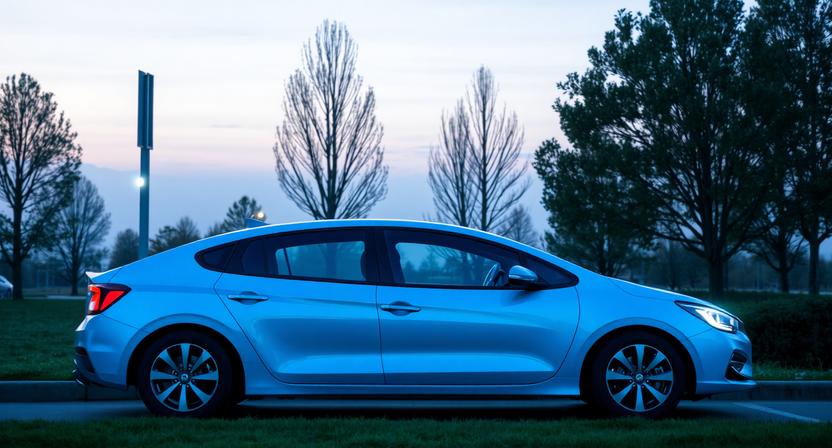
For decades, Thai car taxes were based on engine size. A 3.0L engine paid more than a 1.5L engine, regardless of how clean it was. The 2026 restructuring dismantles this.
Under the new Ministerial Regulation, vehicles are categorized by their propulsion technology (HEV, PHEV, BEV, or ICE) and then taxed on a sliding scale based on their emissions. This creates a “race to the bottom” for manufacturers to optimize fuel efficiency and battery performance to keep their sticker prices competitive.This is where the EV Subsidy begins.
Hybrids are the “middle ground” of the Thai market. To prevent a sudden price shock that could collapse the local supply chain, the National Electric Vehicle Policy Committee (EV Board) approved a temporary lowering of excise rates for HEVs, provided manufacturers meet strict investment and safety criteria.
If a manufacturer invests at least 3 billion THB between 2024 and 2027 and uses Thai-made batteries. These are EV Subsidy. They qualify for these fixed rates:
CO2 Emission Level | 2026–2032 Fixed Rate | Previous/Non-Promoted Rate |
$le 100$ g/km | 6% | Increases 2% every 2 years |
$101–120$ g/km | 9% | Increases 2% every 2 years |
$121–150$ g/km | 14% | Tiered increase |
$> 200$ g/km | 26% | Up to 34% |
The “Safety Tax”: To qualify for these low rates, the vehicle must include at least 4 out of 6 designated Advanced Driver-Assistance Systems (ADAS), such as Autonomous Emergency Braking (AEB) or Lane Keeping Assist (LKA). Without these, the tax rate defaults to the much higher ICE (Internal Combustion Engine) scale.
In 2025, the Excise Department removed the controversial “fuel tank size” restriction (previously limited to 45 liters) and replaced it with a pure Electric Range (E-Range) requirement. This encourages manufacturers to install larger batteries rather than smaller fuel tanks.
High-Range PHEVs ($ge 80$ km): Subject to a low 5% excise tax.
Standard PHEVs ($< 80$ km): Subject to a 10% excise tax.
Luxury PHEVs ($> 3,000$ cc): Subject to a fixed 30% rate, regardless of range.
Traditional gasoline and diesel cars face the harshest increases. Hence the EV Subsidy. The 2026 structure implements a biennial hike (every two years) to gradually phase out high-emission vehicles.
CO2 Emission Level | 2026–2027 Rate | 2028–2029 Rate | 2030 Onward |
$le 100$ g/km (Eco Cars) | 13% | 14% | 15% |
$101–120$ g/km | 22% | 24% | 26% |
$121–150$ g/km | 25% | 27% | 29% |
$> 200$ g/km | 34% | 36% | 38% |
Engines $> 3,000$ cc | 50% | 50% | 50% |
This means a popular gasoline-powered SUV emitting 180 g/km of $CO_2$ will see its price rise significantly every two years, making it nearly impossible to compete with a hybrid or electric equivalent.
While the rest of the industry faces rising taxes, BEVs remain the “protected class.”
Tax Rate: Generally 2% (down from the historical 8% standard).
Condition: To maintain the 2% rate, importers must fulfill their Domestic Production Offset. For every BEV imported in 2024–2025, the manufacturer must produce 2 to 3 units in Thailand during 2026–2027. Failure to do so results in heavy financial penalties and the revocation of the 2% tax privilege. This is a EV Subsidy.
As of early 2026, the market is already reacting:
Price Inflation for ICE: Small “Eco-cars” that used to cost 550,000 THB are seeing price jumps of 10,000–30,000 THB due to the new 13% base rate.
Hybrid Dominance: Manufacturers like Toyota and Honda are aggressively shifting their entire Thai lineups to HEVs to lock in the 6% and 9% rates, allowing them to keep prices stable while their gasoline competitors get more expensive.
Local Battery Boom: Because the lower rates require “locally manufactured battery packs,” Thailand has seen a surge in battery assembly plants (GAC Aion, BYD, and CATL) opening in the Eastern Economic Corridor (EEC).
The 2026 tax restructuring is a masterful use of fiscal policy to force an industrial pivot. By rewarding lower $CO_2$ emissions with significantly lower taxes, Thailand is ensuring that its “Detroit of the East” reputation survives the electric revolution.
For the Thai consumer, the message is clear: Staying with a traditional internal combustion engine will become a luxury, while “going green” is the only way to stay within budget
The 2026 EV excise tax restructuring has a direct and significant impact on Tesla, which currently operates in Thailand primarily as an importer of Completely Built-Up (CBU) units.
While the headline excise rate for Battery Electric Vehicles (BEVs) remains at 2%, Tesla’s pricing and operational model in 2026 are governed by the strict “Offset Production” requirements of the EV 3.5 program.
Tesla joined the Thai market under the EV 3.0/3.5 incentive schemes. These schemes granted Tesla a reduced excise tax (down from 8% to 2%) and import duty exemptions. However, these were not “free” gifts; they were loans against future local production.
As of January 1, 2026, the “payback” period has begun:
The 1:2 Ratio (2026): For every one Tesla (Model 3 or Model Y) imported and sold in Thailand during the 2024–2025 period, Tesla is legally required to produce two EVs locally in Thailand by the end of 2026.
The 1:3 Ratio (2027): If production is delayed into 2027, the requirement jumps to three locally produced units for every one imported unit.
The Tesla Dilemma: Unlike BYD, GWM, or MG, Tesla has not yet completed a high-volume manufacturing plant in Thailand. If Tesla fails to meet these production offsets by the 2026 deadline, they face:
Clawback of Subsidies: Retroactive repayment of the 100,000 THB subsidies per car.
Tax Reassessment: Their excise tax could be retroactively hiked from 2% back to 8% or 10%, leading to massive financial penalties.
For the consumer, a new Tesla purchased in 2026 looks different on the invoice than it did in 2024:
Subsidy Reduction: Under the EV 3.5 scheme (2024–2027), the direct cash subsidy for cars with batteries larger than 50 kWh (like the Model 3/Y) has been slashed from 100,000 THB down to 50,000 THB.
Excise Tax Stickiness: While the excise tax is nominally 2%, this only applies if the manufacturer is participating in the EV 3.5 production scheme. If a brand (like Tesla) were to pivot to being a “pure importer” without local production, their excise tax would jump to 10% in 2026, potentially adding 150,000 – 250,000 THB to the sticker price.
The 2026 landscape for Tesla owners also includes new regulatory and utility costs related to their charging network.
Tesla Thailand has implemented a Supercharger Congestion Fee to comply with new grid-management guidelines.
The 80% Rule: If a Supercharger station is busy, owners are charged a per-minute fee if they stay connected after their battery reaches 80%.
Rising Electricity Rates: The Ministry of Energy has adjusted the “EV Charging” electricity rate. Public charging costs, which were once subsidized at roughly 4–5 THB per unit, have normalized toward 9.5 – 11 THB per unit in 2026 to reflect true grid maintenance costs. This is part of the EV Subsidy.
Conversely, if you are a business owner installing Tesla Wall Connectors for your staff, the 2026 Corporate Tax Reform allows for a 200% tax deduction on the expenses related to EV charging station installation. This is a strategic move to move “charging demand” away from the public grid and into private office buildings. This is part of the EV Subsidy.
Feature | Impact on Tesla (2026) |
Excise Tax | 2% (Conditional on meeting 1:2 local production offset). |
Cash Subsidy | Reduced to 50,000 THB (from 100,000 THB). EV Subsidy |
Import Duties | Duty exemptions for CBUs have largely expired; 2026 favors local assembly. |
Annual Road Tax | Based on weight (~1,600–1,900 THB/year for Model Y). |
Supercharging | New Congestion Fees and higher per-unit electricity costs. |
The big question for the Thai automotive market this year is whether Tesla will announce a SKD (Semi-Knocked Down) assembly line in Thailand to satisfy the 1:2 offset ratio, or if they will opt to pay the penalties—which would likely result in a significant price increase for the Model 3 and Model Y by mid-year.
The information contained in our website is for general information purposes only and does not constitute legal advices. For further information, please contact us.